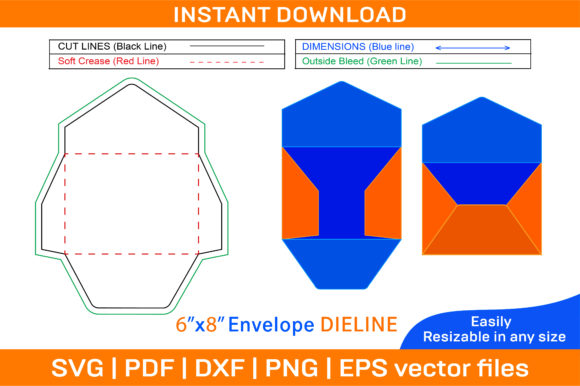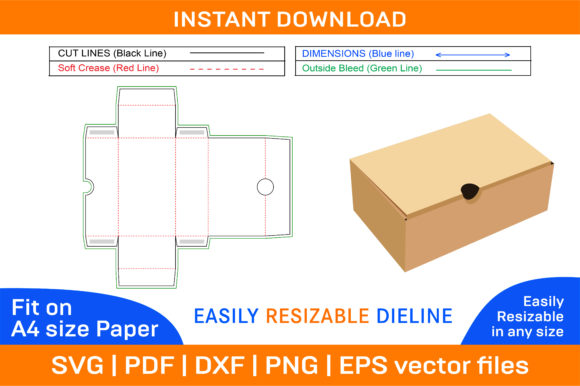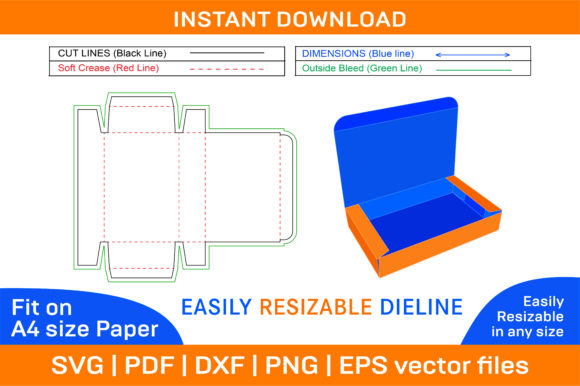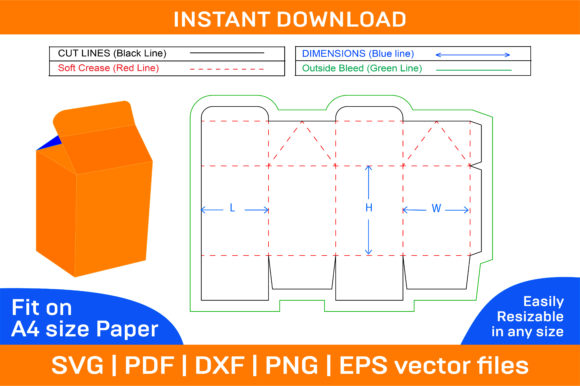
Auto Bottom Closer Box Dieline Template in Graphics and Print Templates
When I sit down with a client to discuss packaging for a new product launch, the conversation rarely stays on the front label. It quickly moves to the unboxing experience. In today’s market, the box is not just a container; it is the first physical touchpoint between the brand and the customer. Recently, while preparing a visual concept for a boutique skincare line that emphasizes sustainability and clean aesthetics, I evaluated several dieline options. One asset stood out immediately: the Auto Bottom Closer Box Dieline Template. This is not merely a file; it is a structural foundation that can elevate a simple package into a premium brand experience.
First Impressions of Structural Integrity
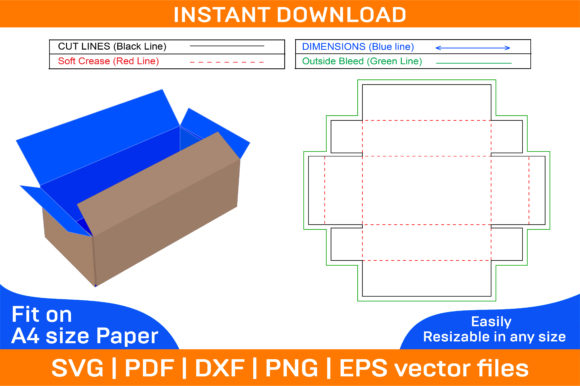
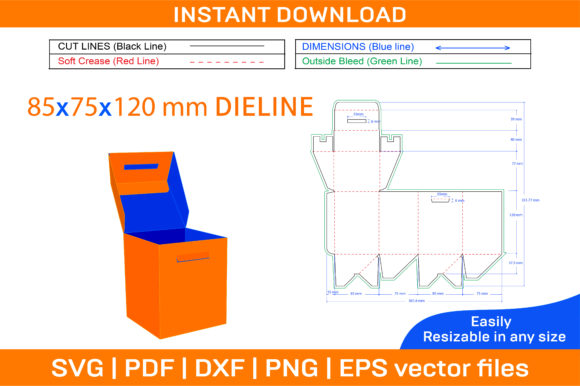
The moment you open the ZIP archive containing this graphic design asset, the organization speaks volumes. For a designer who juggles multiple formats, finding a template that includes SVG, PDF, EPS, DXF, AI, and PNG files is a relief. The inclusion of an Auto bottom closer box dieline template and 3D box design suggests that the creator understands the need for both flat production files and realistic visualization tools. The mood created by this template is one of precision and modern utility. It does not rely on flashy graphics but rather on clean lines and logical folds, which naturally fits the aesthetic of minimalist branding and high-end retail.
This type of printable box template is particularly effective for small business owners who want their products to look professional without investing in custom die-cut molds. The structure implies stability and care, qualities that translate directly into consumer trust. When designing for a handmade business or a small business branding campaign, having a reliable structural base allows the creative focus to shift toward typography, color palettes, and imagery rather than worrying about whether the box will actually close properly.
Real-World Application in Client Projects
In my recent workflow, I used this template as the backbone for a seasonal gift set. The challenge was to create a cohesive brand identity across multiple items—soaps, candles, and lotions—while keeping the packaging distinct yet unified. The Auto Bottom Closer Box Dieline Template provided the perfect canvas. Because the surface area is well-defined, I was able to apply a subtle, textured background that hinted at natural ingredients without overwhelming the design.
This asset performs exceptionally well in various design situations. For packaging design, it offers ample space for essential information like ingredients and barcodes while maintaining a clean front panel for the logo. In terms of marketing visuals, the 3D mockup included in the bundle allowed me to present the concept to the client instantly. Seeing the box rendered in three dimensions helped the client visualize how their product would sit on a shelf, bridging the gap between digital proof and physical reality. Furthermore, for editorial design projects that require prop styling, having a realistic vector representation ensures that any composite images look authentic.
Where the Asset Shines
Certain applications bring out the best in this creative design tool. It works beautifully in large layout areas where the structural lines can be appreciated as part of the overall composition. For instance, when creating social media graphics for Instagram posts or Pinterest pins, using the 3D render as a hero graphic adds depth and professionalism. It transforms a flat image into a tangible object that viewers can almost hold.
Additionally, this template is ideal for product mockups and sticker design integration. If you are selling digital products or physical goods on platforms like Etsy, showing your item in a closed, structured box significantly increases perceived value. The foldable nature of the box allows for creative flaps that can feature secondary branding elements, such as a thank-you message or a social media handle, turning the act of opening the package into a marketing opportunity. It also serves as a strong foundation for sublimation design projects, where the entire surface needs to be covered seamlessly.
Areas Requiring Careful Consideration
However, no single asset is a magic bullet, and there are scenarios where this template requires careful handling. In minimalist branding projects that rely on extreme negative space, the visible crease lines and fold indicators might distract from the intended purity of the design. Designers should be cautious when placing complex backgrounds behind the box in digital ads, as low-contrast designs can make the edges of the box disappear, confusing the viewer about the object's form.
Furthermore, in crowded layouts or when reducing the asset to very small sizes, such as favicon-sized icons or tiny mobile ad banners, the fine details of the dieline may become muddy. The structural integrity that makes the box look good at full scale can be lost at miniature resolutions. For professional corporate materials that demand strict visual hierarchy, ensure that the box does not compete with primary text elements. It should support the message, not dominate it.
Practical Designer Notes for Commercial Use
Before integrating this digital product into a paid client project, there are several technical checks every designer must perform. First, always test the vector files in black and white. This reveals whether the contrast levels are sufficient for printing and whether the design holds up without the aid of color. Check the contrast on both light and dark backgrounds to ensure versatility.
Previewing the asset at various sizes is crucial. Place the SVG or PNG design on real mockups to see how it interacts with shadows and lighting. Inspect the PNG transparency if you plan to use it for web overlays, ensuring there are no jagged edges. Review the file formats carefully; while the AI and EPS files offer editability, verify that all paths are closed and corners are rounded correctly to avoid print errors. Compare the visual weight of the box against different font styles—serif fonts may add elegance, while sans serif fonts reinforce modernity. Handwritten or script fonts might clash with the industrial precision of the box unless balanced carefully.
Finally, and most importantly, confirm the commercial license. Even if the asset is labeled as a commercial design resource, some licenses restrict the number of end products or prohibit resale as a standalone template. Ensure you have the right to use the design assets for your specific scope of work, whether it is for a limited run of print-on-demand items or a mass-market retail launch.
Final Verdict
The Auto Bottom Closer Box Dieline Template is a robust, versatile tool that bridges the gap between digital planning and physical production. Its inclusion of multiple file formats and 3D visualization capabilities makes it invaluable for designers working on crafters projects, Cricut users creating custom packaging, and digital sellers looking to enhance their listings. By providing a solid structural framework, it allows creatives to focus on the artistic details that define a brand. For anyone serious about elevating their visual hierarchy and delivering a polished final result, this template is a worthy addition to any toolkit.