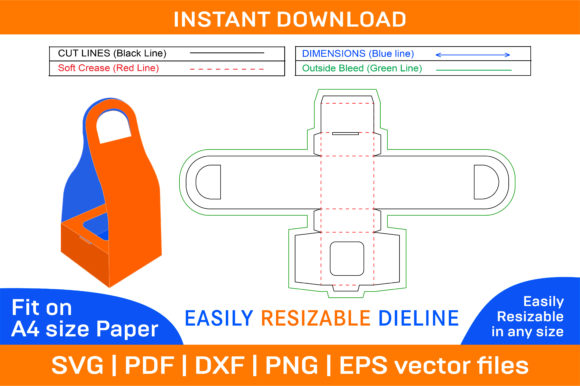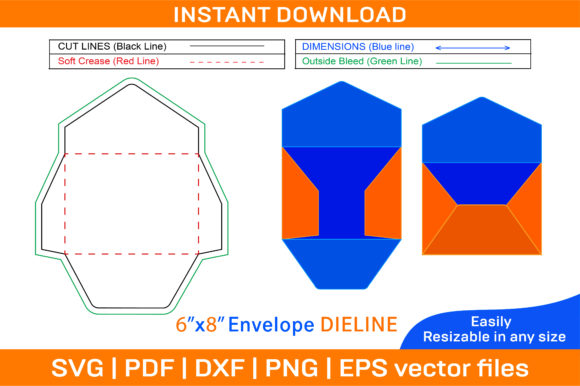
Envelope Packaging Dieline Template: Graphics & Print Templates Review
I recently received a request from a client who runs a boutique skincare line. They needed packaging that felt organic, premium, and tactile, but their budget didn’t allow for custom die-cutting just yet. They asked if I could create a mockup concept that looked like high-end retail packaging using standard envelope structures. This is where the Envelope Packaging Dieline Template became an essential part of my workflow. As a graphic designer who frequently bridges the gap between digital concepts and physical products, I look for assets that offer structural accuracy and visual flexibility. After testing this asset across several branding projects, here is my professional assessment of its utility for real-world client work.
The First Impression: Structural Integrity Meets Visual Mood
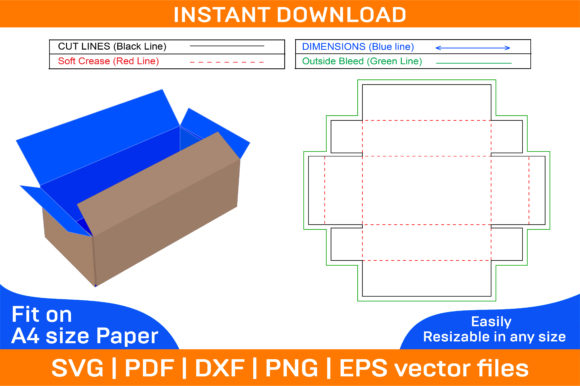
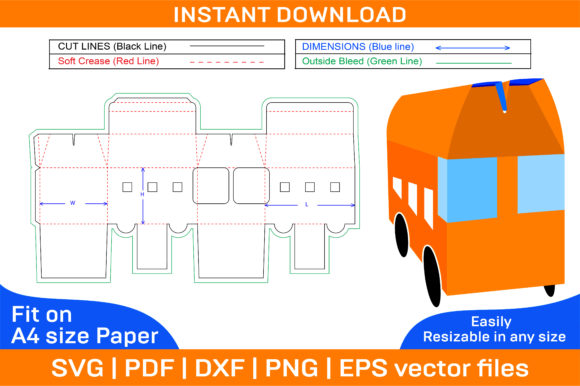
When you first unzip the archive containing the Envelope Packaging Dieline Template, the immediate takeaway is the comprehensive nature of the file set. It isn’t just a single image; it is a robust design bundle that includes SVG, PDF, EPS, DXF, AI, and PNG files. For a designer, this variety is crucial. The inclusion of vector formats like AI and EPS allows for infinite scalability without quality loss, which is non-negotiable when creating large-scale posters or detailed product labels. Meanwhile, the presence of DXF files makes this asset surprisingly versatile for crafters and Cricut users who need to cut physical prototypes.
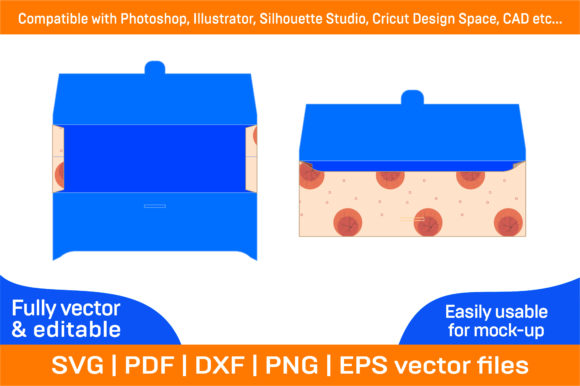
Visually, the template carries a mood that is clean, structured, and inherently trustworthy. It doesn’t scream for attention with chaotic elements; instead, it relies on geometric precision and negative space. This makes it an excellent foundation for brand identity projects where clarity is key. The 3D envelope design aspect allows me to quickly visualize how a flat layout will fold and present itself in three dimensions. This capability saved hours of manual modeling time during a recent campaign for a local artisanal soap brand. The asset naturally fits projects that require a sense of organization and care, such as wedding invitations, corporate gifting kits, or eco-friendly product launches.
Real-World Application in Client Projects
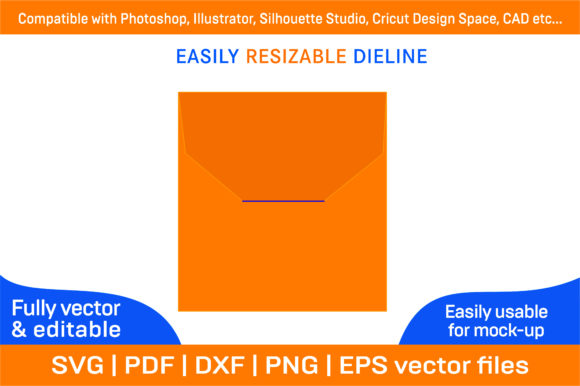
In practice, the Envelope Packaging Dieline Template performs exceptionally well in scenarios where physical touchpoints are involved. I used it to develop a series of packaging design concepts for a handmade jewelry client. By applying their logo and color palette to the dieline, we were able to produce realistic product mockups that convinced the client to move forward with printing. The ability to treat the envelope structure as a canvas for marketing visuals means that every unboxing experience becomes a branded moment.
Beyond packaging, this asset has found its way into various other areas of my design portfolio. For instance, I utilized the structural lines of the template to inform the layout of a printable design series intended for digital sellers on Etsy. The clean geometry provided a perfect grid system for organizing text and imagery. In another project, I adapted the shape for a sticker design collection, where the folded edges added a unique dimensional quality to flat vinyl stickers. It also serves as a strong base for t-shirt design graphics when the motif requires a box-like or contained aesthetic, ensuring the artwork stays within defined boundaries.
The versatility extends to social media graphics as well. When creating Instagram posts or Pinterest pins for a small business branding campaign, I often use the envelope silhouette as a frame for testimonials or promotional offers. It creates a visual hierarchy that draws the eye inward, making the core message more impactful. For editorial design pieces, such as blog headers or newsletter banners, the template adds a layer of sophistication that simple rectangular layouts lack.
Where the Asset Shines
This design asset works best in contexts that benefit from structure and clarity. Large layout areas, hero graphics, and thematic collections are ideal candidates. If you are designing for a modern design aesthetic that values minimalism and function, the Envelope Packaging Dieline Template provides the necessary scaffolding. It is particularly effective for sublimation design projects, where the continuous surface of the envelope can be wrapped in all-over prints. Additionally, for web design elements that mimic physical mailers, it offers a tangible connection to the user’s digital experience.
Areas Requiring Careful Consideration
However, no asset is universally perfect. There are specific situations where this template requires careful handling. In minimalist branding projects that rely on extremely subtle details, the structural lines of the envelope might compete with delicate typography. Similarly, in crowded layouts or complex backgrounds, the distinct shape of the envelope can become visually noisy, disrupting the visual hierarchy. I advise against using it in low-contrast designs where the folds and edges might get lost, reducing the perceived quality of the final output. Furthermore, for highly professional corporate materials that demand strict uniformity, the creative interpretation of a "foldable box" or "paper box" might feel too casual unless styled appropriately.
Technical Workflow and Practical Designer Notes
Before integrating the Envelope Packaging Dieline Template into any commercial design, there are several technical checks I always perform. First, I test the asset in black and white. This ensures that the composition holds up without relying on color alone, a critical step for maintaining readability and accessibility. I also check contrast on both light and dark backgrounds to ensure the structural elements remain visible and do not clash with the background hue.
Previewing the asset at various sizes is another vital step. While the vector files (SVG, AI, EPS) scale beautifully, checking the raster versions (PNG) at thumbnail size helps identify any pixelation or loss of detail that might affect small applications like favicon design or mobile app icons. Placing the design on real mockups is perhaps the most important validation. It reveals how the shadows and highlights interact with the virtual lighting, adding depth and realism to the presentation.
File format inspection is non-negotiable. I verify the editability of the SVG and vector paths to ensure they are clean and organized. If transparency is required, I inspect the PNG files to confirm that the alpha channel is correctly applied, preventing unwanted white boxes around the design. Comparing the template’s style with different font pairings—such as serif fonts for elegance, sans-serif fonts for modernity, script fonts for handcrafted vibes, handwritten fonts for personal touches, and display fonts for bold statements—helps determine the overall tonal fit.
Final Verdict for Professional Use
The Envelope Packaging Dieline Template is more than just a clipart or illustration; it is a functional graphic design asset that enhances the credibility of creative design projects. Its inclusion of multiple formats makes it suitable for a wide range of professionals, from digital sellers and print-on-demand entrepreneurs to traditional graphic designers working on brand identity systems. Whether you are creating a Cricut project, designing a Canva template for clients, or developing a full suite of marketing visuals, this asset provides a reliable foundation.
For those operating in the creative marketplace, this template offers significant value by accelerating the prototyping phase. It allows designers to present polished, realistic concepts to clients before committing to expensive production runs. However, always confirm the commercial license terms before using it for client or business projects. When used thoughtfully, respecting the rules of visual hierarchy and brand consistency, the Envelope Packaging Dieline Template is a powerful tool that elevates the entire design process, turning simple paper concepts into compelling physical realities.